

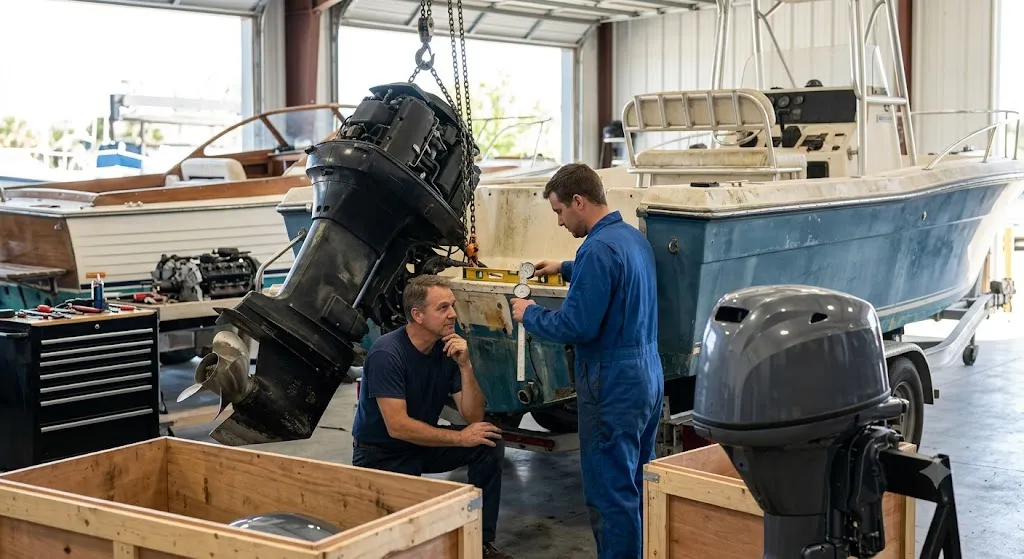
An older boat can still have many useful years ahead, even when its original engine no longer feels dependable. Repowering gives owners a chance to improve reliability, update controls, and make the boat better suited to how it is used today.
The decision, however, should not begin with horsepower alone. Hull condition, transom strength, engine weight, steering, fuel systems, and electrical compatibility all need attention before a replacement motor is selected. A thoughtful repower can improve the boat, while a rushed choice can create new problems.
Inspect the Boat Before the Engine
Before shopping for a new motor, the condition of the boat itself should be checked carefully. The transom, mounting area, steering components, and surrounding structure must be capable of supporting the replacement.
Older boats may have hidden wear that is not obvious during normal use. Addressing structural concerns first helps ensure the new engine is installed on a sound foundation.
Compare Old and New Weight
A newer engine with similar horsepower may not weigh the same as the motor being removed. Even a moderate change in stern weight can affect how the boat sits in the water.
This matters most on smaller or older hulls. Owners should compare engine weight, battery placement, fuel location, and other heavy equipment before assuming the new setup will behave exactly like the old one.
Do Not Copy the Previous Setup
Replacing an old motor with the same horsepower rating may seem simple, but the boat’s current use may have changed. More passengers, fishing equipment, electronics, or accessories can alter performance expectations.
Repowering is a good opportunity to reassess the entire setup. The replacement should reflect how the boat is used now rather than automatically copying a decision made many years ago.
Build a Practical Shortlist
Once the boat’s limits are confirmed, owners can review suitable Outboard Motors for Sale based on shaft length, engine weight, horsepower, controls, and intended workload.
This approach keeps the search focused. It also reduces the risk of selecting an attractive motor that later proves difficult to install or poorly matched to the hull.
Controls May Need Updating
An older boat may use control systems that are not compatible with a newer engine. Throttle, shift, gauges, wiring, ignition, and steering may all require changes during a repower.
These upgrades should be included in the budget from the beginning. The engine price alone does not represent the complete cost of bringing an older boat up to a modern operating setup.
Review the Fuel System
Fuel hoses, tanks, filters, and fittings deserve attention before a new motor is connected. Components that have been in service for many years may no longer be suitable for continued use.
Replacing worn fuel-system parts during repowering can be more practical than waiting for a problem later. It also provides a cleaner starting point for the new engine.
Check Electrical Capacity
Modern outboards may depend on different electrical systems than older engines. Batteries, cables, switches, and charging requirements should therefore be reviewed.
A weak electrical setup can undermine the benefits of a new motor. Updating tired components at the same time can improve starting reliability and support additional onboard electronics.
Consider Service Access
Repowering changes more than performance. It also begins a new maintenance cycle, so access to parts and qualified servicing should be considered before installation.
An owner evaluating a Mercury Outboard may want to look at available horsepower ranges, control options, local service capability, and how well a specific model fits the existing boat.
Propeller Setup May Change
The old propeller should not automatically be assumed suitable for the replacement engine. Differences in gear ratio, power delivery, engine height, or boat load can change propeller requirements.
Correct propeller selection helps the new motor operate within its intended range. Testing after installation may reveal that a different pitch or design provides better acceleration and cruising behavior.
Test the Complete Boat
After repowering, the boat should be evaluated under realistic conditions. This means carrying normal fuel, passengers, equipment, and gear rather than testing only with a light load.
Acceleration, engine speed, steering response, trim behavior, and cruising comfort should all be observed. Small setup adjustments may be needed before the boat feels properly balanced.
Think Beyond Extra Speed
A repower does not have to be about making an older boat faster. Many owners are looking for easier starting, smoother control, quieter operation, improved reliability, or more convenient maintenance.
Defining those goals early helps prevent overspending on power that provides little practical benefit. The most successful repower is one that improves everyday ownership.
Conclusion
Repowering can give an older boat a useful second life, but the project should be treated as more than an engine swap. Structural condition, weight, controls, fuel systems, electrical equipment, propeller choice, and service access all deserve careful review.
When these factors are considered together, the replacement motor can feel like a genuine improvement rather than simply a newer version of the old setup. Good planning helps create a boat that is more reliable, balanced, and enjoyable to operate.